A New Administration, New General Assembly, and 60 Days to Act
by Sheri Shannon, co-founder of Southside ReLeaf
The 2026 Virginia General Assembly legislative session starts on Wednesday, January 14, and will run for a whirlwind of 60 days. That’s right – two months to review, debate, amend, and pass hundreds of bills that shape the lives of Virginians.
Virginia’s state legislature convenes for 45 days in odd-numbered years and 60 days in even-numbered years.
If you’re wondering how meaningful legislation is accomplished in a short time frame, the answer is stamina, comfortable walking shoes, laser-sharp focus, and sheer willpower – often fueled by caffeine – to keep moving forward. It is an exhilarating and exhausting process.
Within 60 days, elected officials and their staff will sprint a marathon, aiming to pass their policy priorities. Advocates will be there alongside them – attending 7 a.m. committee meetings, providing public comment, rallying support across coalitions, and championing policies that affect nearly every issue of our lives.
Whether you support a part-time or full-time state legislature, the annual flurry of legislative action in Virginia commands our attention, especially here at Southside ReLeaf.
As an organization co-founded by two policy nerds, consider this your quick field guide to what’s happening, what that means for environmental justice, and why we need YOU to get involved.
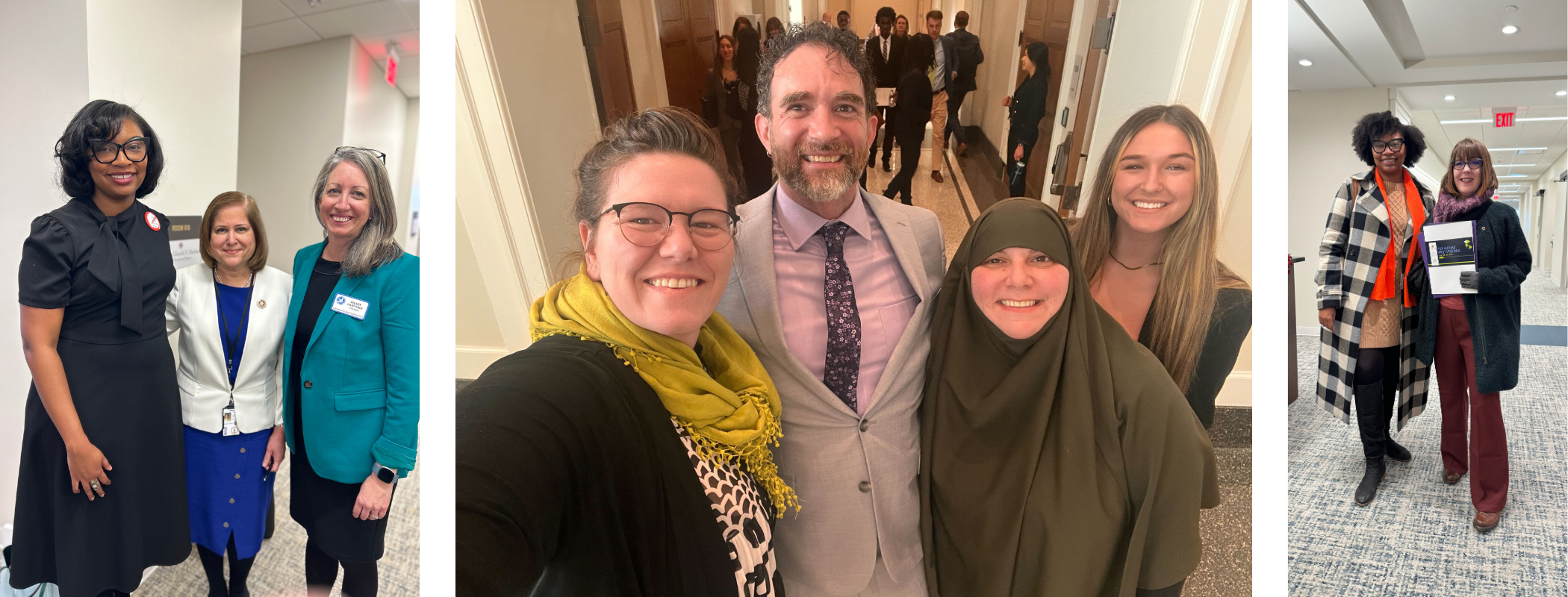
Photos taken in the hallway of the GA building from left to right: 1) Southside ReLeaf co-founder Sheri Shannon, Lt. Gov.-elect Hashmi, and Chesapeake Bay Foundation President & CEO Hilary Harp Falk; 2) Legal Aid Justice Center Senior Supervising Attorney Maisie Osteen, The Humanization Project (THP) Director and co-founder Taj Mahon-Haft, THP Digital Content Creator Fatimah Muwahhid, and Southside ReLeaf’s Policy Support Specialist Kami Blatt; 3) Sheri Shannon and VCU Health’s Acting Associate Director for Injury and Violence Prevention Carol Olson.
Why This Matters
Environmental justice is more than good intentions. It requires laws, regulations, and policies to:
Protect people from environmental hazards.
Identify and fund specific remediation targets.
Mandate equal access to decision-making so we can all live, work, and play in safe and healthy environments.
Because Virginia is a Dillon Rule state – meaning local governments can only take certain actions authorized by the General Assembly – considerable time is spent lobbying delegates and state senators to approve bills that give localities the power to meet community needs.
For us, championing policies that uplift our neighbors is essential to ensuring that the City of Richmond and local governments across the state have every tool available to improve residents' quality of life.
Yes, it’s very tedious work, and the pace of session can be overwhelming with thousands of bills introduced every year. But we remain committed to this work because we cannot wish our way out of decades of disinvestment and discriminatory practices that continue to segregate neighborhoods, criminalize poverty, and deny families the care, connectivity, and safe communities they desire and need to thrive.
Fortunately, incredible organizations across Virginia are leading this work, and we’re proud to stand alongside them.
Our Legislative Priorities
As in previous sessions, we support efforts to:
Expand local authority of tree conservation during development to every Virginia locality statewide, and broader authority for tree replacement.
Rejoin the Regional Greenhouse Gas Initiative, which provides funding for low-energy efficiency programs, safety repairs for homes, and flood resilience projects.
Implement energy efficiency upgrades, weatherization, and renewable energy programs that lowers utility costs and energy consumption.
Establish equitable land use policies that create more affordable housing, expand public transit and rail, and transform communities into walkable, bike-friendly places.
Environmental justice is inherently intersectional. In addition to advocating for the natural environment and improving Richmond’s built environment, Southside ReLeaf supports policies that strengthen economic stability, expand housing affordability, and increase access to quality health care and education – all social drivers that lead to a significantly higher life expectancy.
Keep an eye out for bills as they are prefiled in the Virginia State Legislative Information System, an essential database that allows the public to track legislation, committee meetings, and votes.
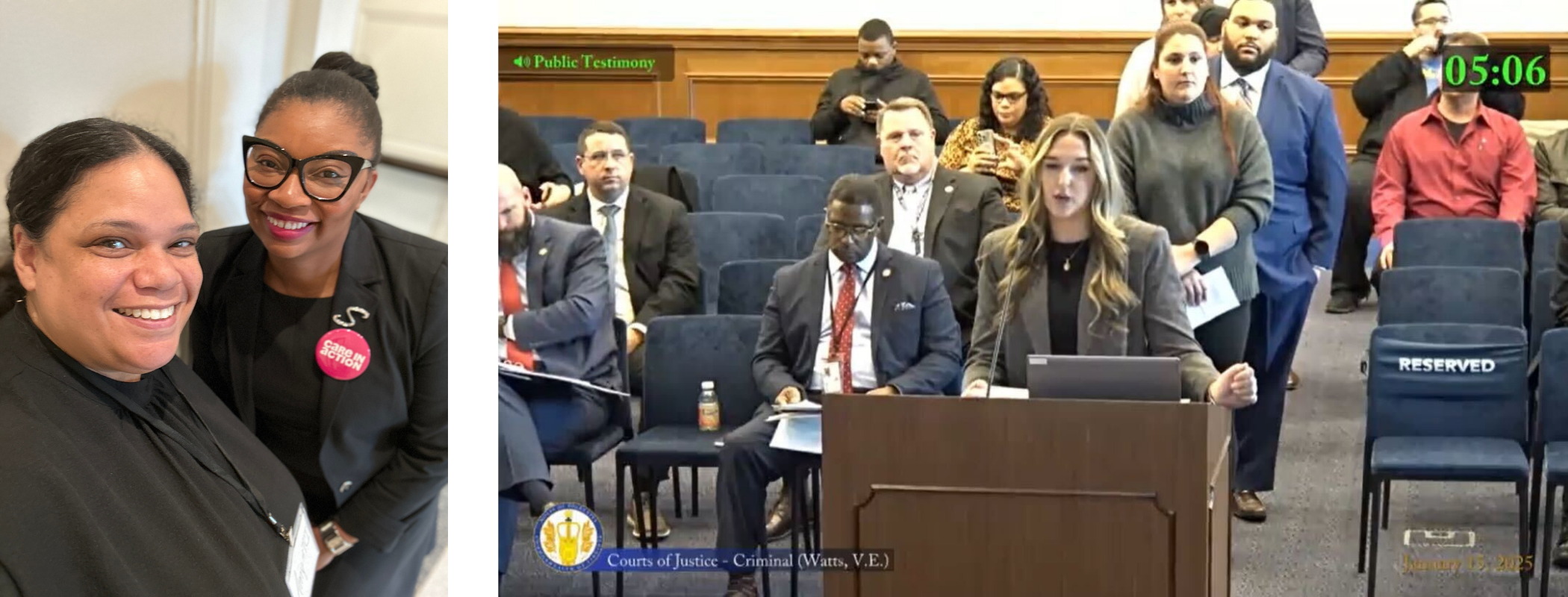
Photos from left to right: 1) Co-founders Amy Wentz and Sheri Shannon snap a selfie in the hall of the GA building; 2) Kami Blatt testifies at the GA while Amy Wentz films from her seat.
What to Expect
The Budget
Outgoing Gov. Glenn Youngkin submitted his final two-year budget on December 17, 2025, for the biennium running from July 1, 2026, through June 30, 2028.
Lawmakers will review Youngkin’s budget amendment proposals, and the House and Senate will need to agree on a final version to send to Governor-elect Abigail Spanberger, who has the power to sign, veto, or propose changes.
In short, the outgoing governor proposes the budget, the legislature amends it, and the incoming governor has final approval.
Who’s Who
January brings major leadership changes, including a new governor, lieutenant governor, and attorney general. We will also see the largest House Democratic Majority in 40 years. In politics, the ruling party in power determines which bills advance and who controls key committees.
November’s general election also triggered multiple special elections, including:
The State Senate seat vacated by Lieutenant Governor-elect Ghazala Hashmi.
The House of Delegates seat vacated by Senator-elect Michael Jones.
Additional vacancies created by legislators appointed to executive branch roles.
Richmond’s 2026 General Assembly delegation:
Del.-elect Charlie Schmidt (HD 77)
Sen.-elect Michael Jones (SD 15)
Long story short: A high turnover means there are a lot of new folks in the building, and the vibe will be different. Buckle up!
Hot Topics This Session
Data centers: Legislators will debate data center growth and its environmental impacts, including rising energy demand, water use, and the strain on the electric grid that can drive up costs for ratepayers.
Affordability: Expect to see proposals aimed at reducing health care and energy costs, building more affordable housing, and supporting workers – all of which directly affect household stability and public health.
Constitutional Amendments: Lawmakers are expected to vote on four proposed amendments on the first day of session: restoration of voting rights, same-sex marriage, abortion access, and congressional redistricting.
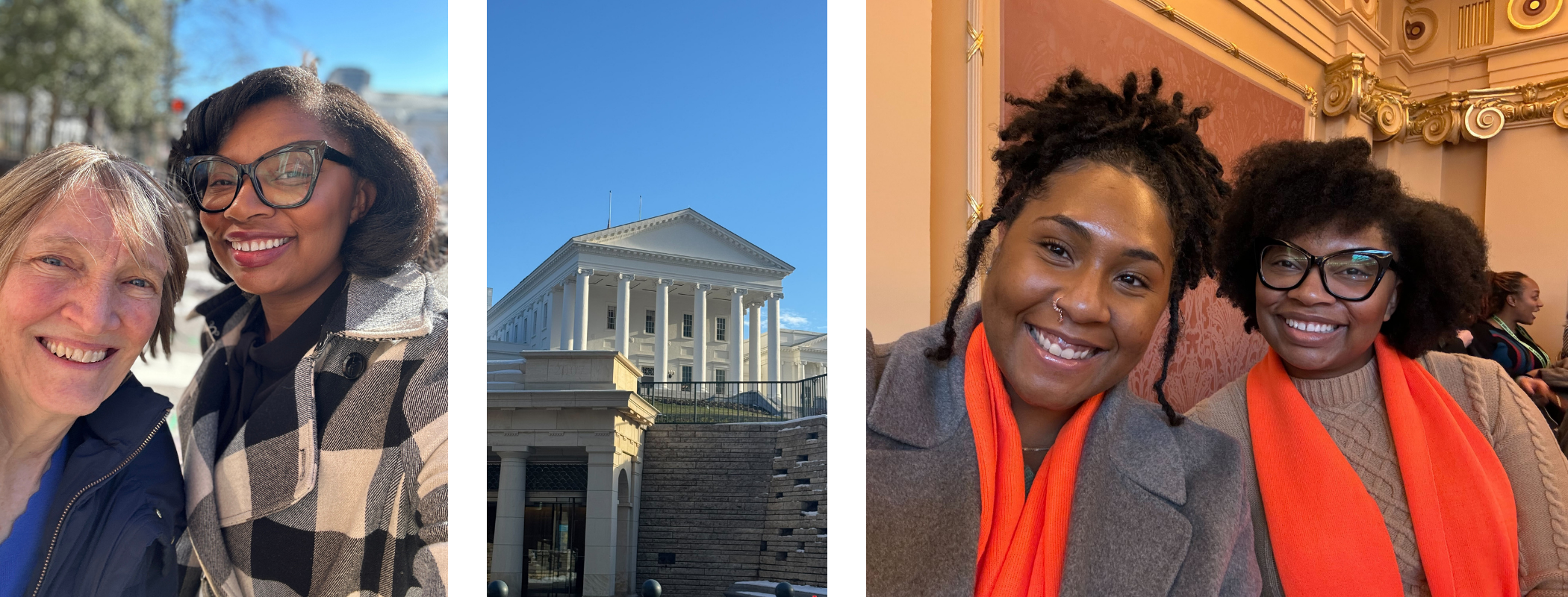
Photos from left to right: 1) Chesapeake Bay Foundation’s Ann Jurczyk and Sheri Shannon pose for a photo outside of the GA building; 2) The Virginia State Capitol; 3) Southside ReLeaf’s Graphic Designer Dejah Winston and Sheri Shannon pose in matching orange scarves in the gallery in the House of Delegates chamber during a lobby day.
Stay Engaged
The next two months will shape how Virginia addresses climate, housing, and public health for years to come. By actively participating in the legislative process, we can all help our communities move closer to achieving environmental justice.
Watch session previews by Chesapeake Bay Foundation and Virginia Conservation Network.
Sign up for VCN’s weekly updates and track bills that matter most to you.
Attend a Lobby Day and make your voice heard. Upcoming opportunities include:
January 21: Richmond Climate Rally
January 21: VAIPL Day for All People
January 27: CBF's Clean Water Lobby Day
February 4: VCN Conservation Lobby Day
February 9: Data Center Reform Lobby Day
February 17: Virginia Sierra Club Climate Lobby Day
Most importantly, advocate alongside us at the General Assembly by signing up for our action alerts!